
May 2025
 THE EARLY BEGINNINGS OF OXFORD COUNTY - PART 2 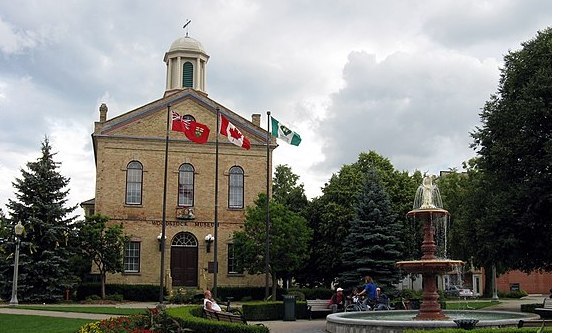 In 1826, the new boundaries of the County of Oxford were adjusted to include the townships of Nissouri, Zorra, Blandford, Blenheim, Oxford, Dereham, Norwich, Burford and Oakland. In the 1830s, a different group of immigrants were encouraged to settle in Oxford to ensure this community's loyalty to the British crown. British naval and army officers placed on half-pay looked to the colonies for a new career at the conclusion of military service. To facilitate the settling of these men a system of credits, graduated according to rank and length of service, was set up to enable military men to purchase lands from the Crown. The first to arrive was Alexander Whalley Light, a retired colonel who came to Oxford County in 1831. He settled on Dundas Street between Beachville and Woodstock. He was joined by Philip Graham in 1832, a retired captain of the Royal Navy, who selected lands beside Light. Also in 1832, Captain Andrew Drew, on half-pay from the Royal Navy, arrived in Woodstock to make preparations for his superior, Rear-Admiral Henry Vansittart, also on half-pay. Grants of land to the half-pay officers could only be made if the land was unoccupied. However, when they arrived in Woodstock, their chosen grants already had tenants: squatters. In 1826, the new boundaries of the County of Oxford were adjusted to include the townships of Nissouri, Zorra, Blandford, Blenheim, Oxford, Dereham, Norwich, Burford and Oakland. In the 1830s, a different group of immigrants were encouraged to settle in Oxford to ensure this community's loyalty to the British crown. British naval and army officers placed on half-pay looked to the colonies for a new career at the conclusion of military service. To facilitate the settling of these men a system of credits, graduated according to rank and length of service, was set up to enable military men to purchase lands from the Crown. The first to arrive was Alexander Whalley Light, a retired colonel who came to Oxford County in 1831. He settled on Dundas Street between Beachville and Woodstock. He was joined by Philip Graham in 1832, a retired captain of the Royal Navy, who selected lands beside Light. Also in 1832, Captain Andrew Drew, on half-pay from the Royal Navy, arrived in Woodstock to make preparations for his superior, Rear-Admiral Henry Vansittart, also on half-pay. Grants of land to the half-pay officers could only be made if the land was unoccupied. However, when they arrived in Woodstock, their chosen grants already had tenants: squatters.Half-pay officers went to considerable lengths to clear their chosen parcels of land, including buying out or scaring off the existing squatters. This treatment caused lasting grievances between the first American settlers, and the later British immigrants. When Simcoe passed through Oxford County on his survey of Upper Canada, he designated an area as a likely town site in the gore of land between the Townships of East and West Oxford, and a few lots in North Oxford. However, after examination by 2 surveyors in 1830, a superior site for the town was designated to the east on Lots 21 and 22 on the first concession of Blandford Township. Hereafter, the town site was named Blandford. However, since settlement had already started in the earlier town plot, 2 villages developed within a mile of each other. Drew purchased property in the area known as Blandford in 1832 and aspired to make this area the center of the growing community. He built a substantial Anglican church and a general store, as well as homes for Admiral Vansittart and himself. Admiral Vansittart was not amused when he arrived with his family and the Church of England clergyman for St. Paul's Church, Reverend William Bettridge, in 1834. Drew had used funds raised by Vansittart in England to build a church on his own property, not on the land stipulated by Henry Vansittart. Drew also did not complete the building of Vansittart's home and purchased property in his name only. The falling out of the partners resulted in litigation lasting into the 1840s. But the half-pay officers kept coming: Darius E. Riddle, brother-in-law of Admiral Vansittart; Col. R.A. Hunter, instrumental in having the first grammar school erected in 1848; Major Edward Buller; Major Hugh Barwick, who became Oxford County Treasurer; Colonel Delatre; and Peter Boyle de Blaquiere. THE ROLE OF A PHARMACIST - PART 1  Many think of their pharmacist as the gatekeeper between them and their medications. However, the role of a pharmacist is much more than readying drugs after being given a prescription. Many think of their pharmacist as the gatekeeper between them and their medications. However, the role of a pharmacist is much more than readying drugs after being given a prescription.In today’s overwhelming healthcare system, pressures on primary care continue to mount. A shortage of available family care physicians creates significant gaps in care for patients who cannot get in to see their providers or those who don’t have one. Pharmacists continue to work toward filling these gaps so that all patients can receive the care they need promptly, a task pharmacists are willing to take on—as long as they are given the compensation they deserve for the significantly larger workload. A new survey conducted by Leger Healthcare spoke to pharmacists nationwide to determine how they felt about their expanding role in the healthcare system and what needs to happen going forward so they can be prepared with the tools and resources to help more people. OBITUARIES 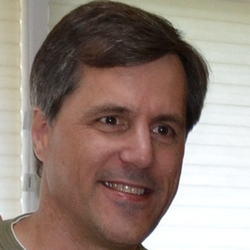 Mark Daniel Wilson age 55 Mark Daniel Wilson age 55Devoted husband to Sandra (nee Haley) his beloved partner of 34 years, and a proud father to his sons, Devin and Wave. His pride deepened with the arrival of his grandchildren, Jenna and Isaac, who adored their silly Poppy. Mark (Chris & Roly's son-in-law), also acted as the Chef on a number of occasions at the Chapter 2 London Veterans Association Annual BBQ held at the Haley Residence. |